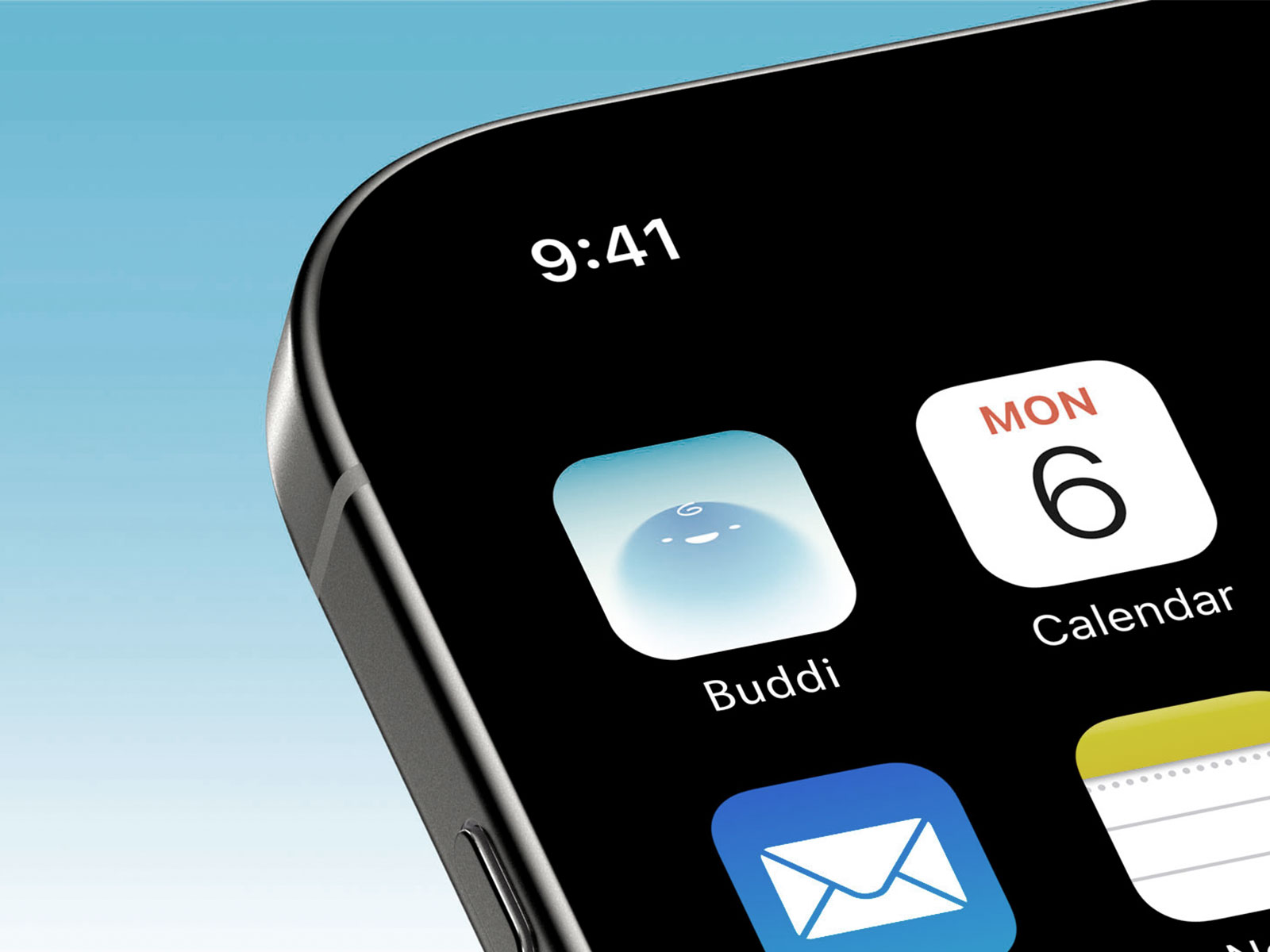
Pangea: Case Study
-
Tiit Telmet Award 2025
Branding
Art direction
-
Web Design
Timeline
4 weeks
Tools
Adobe Illustrator
-
Adobe Photoshop
-
Blender
Team
Rayna Lai | UX/UI
Problem
Busy parents have difficulty balancing responsibilities throughout the week. Commuting between work, home, and daycare takes a considerable amount of time, making it difficult to seek adequate care for their child within the busy healthcare system.
Solution
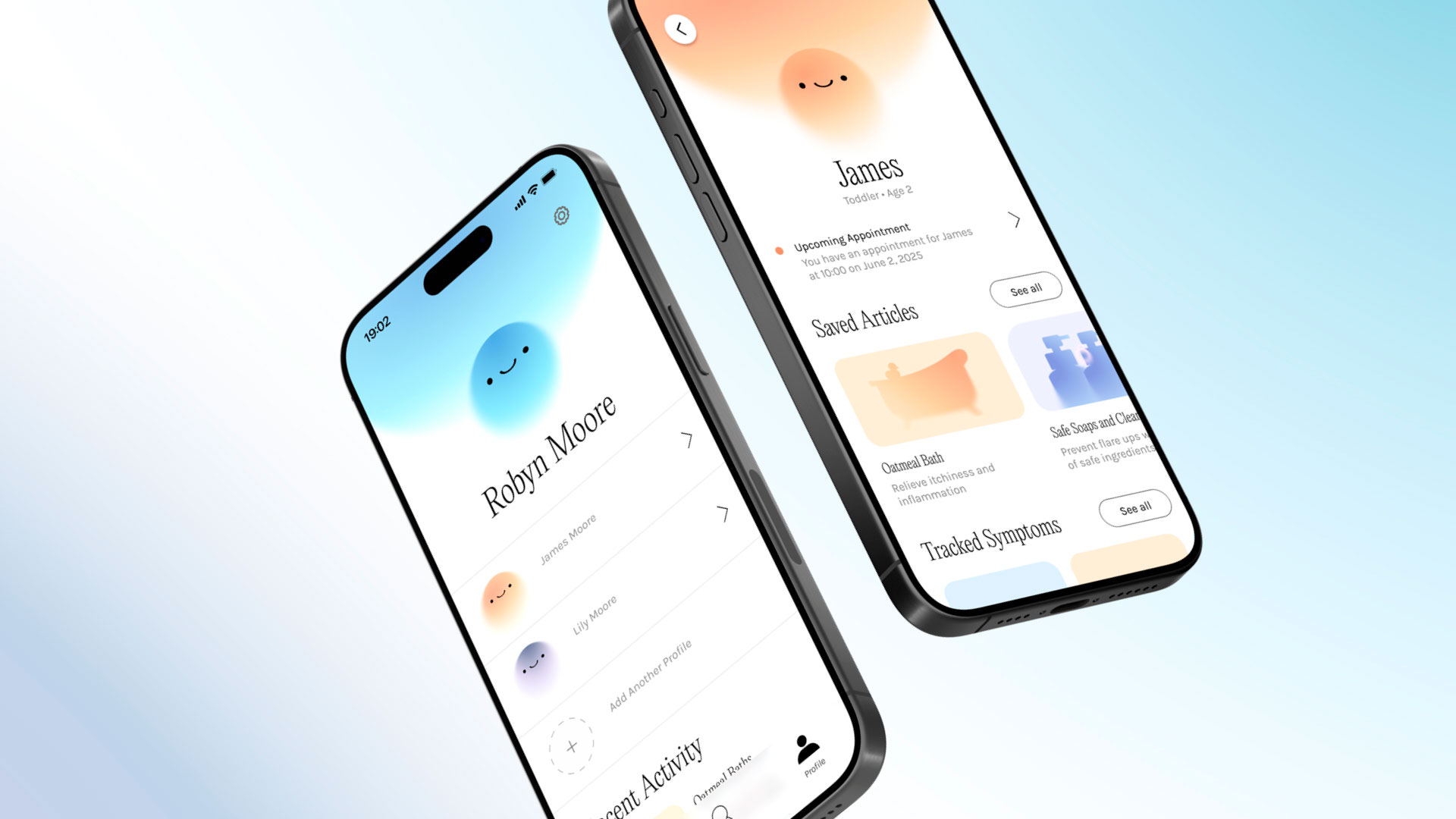
In order to help busy parents, I proposed an app that helps parents take their child’s health into their own hands by providing accessible and digestible lessons and tutorials on common health conditions.
Back to Project
Competetive Analysis
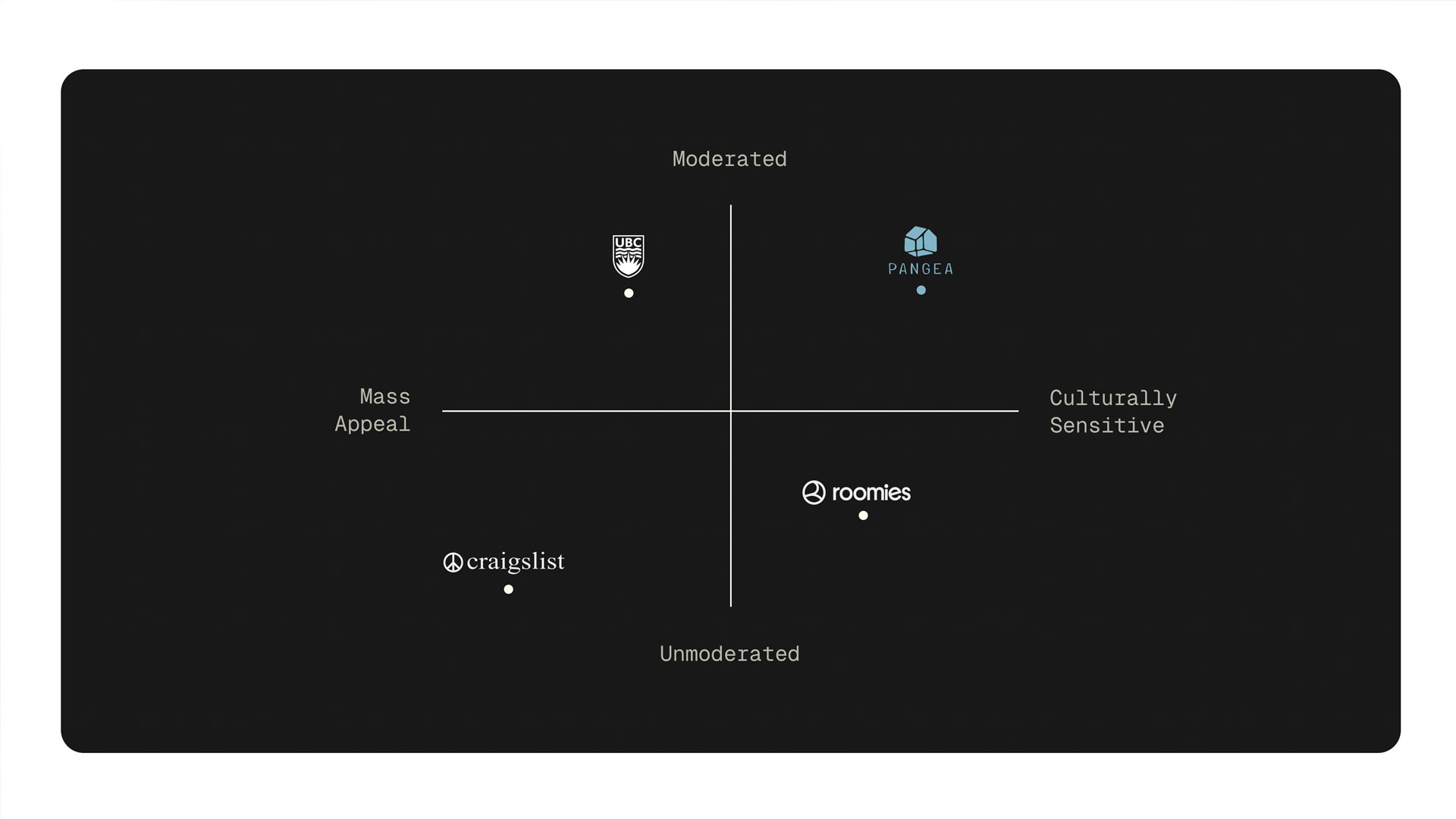
To get a better understanding of the competetive landscape for a roommate searching app, we took a look at 3 different roommate searching platforms. This step helped us to identify commonalities between the different services and allowed us to identify what opportunities are avaliable within the market for our brand and product.
This process made it clear there was a gap in the market for intentional, personality and habit based roommate matching that prioritizes cultural exchange.
Surveying
After analyzing the market and identifying the solution we wanted to design, we gathered 15 survey responses and 5 interviews.
Secondary Research
After analyzing the market and identifying the solution we wanted to design, we gathered 15 survey responses and 5 interviews.
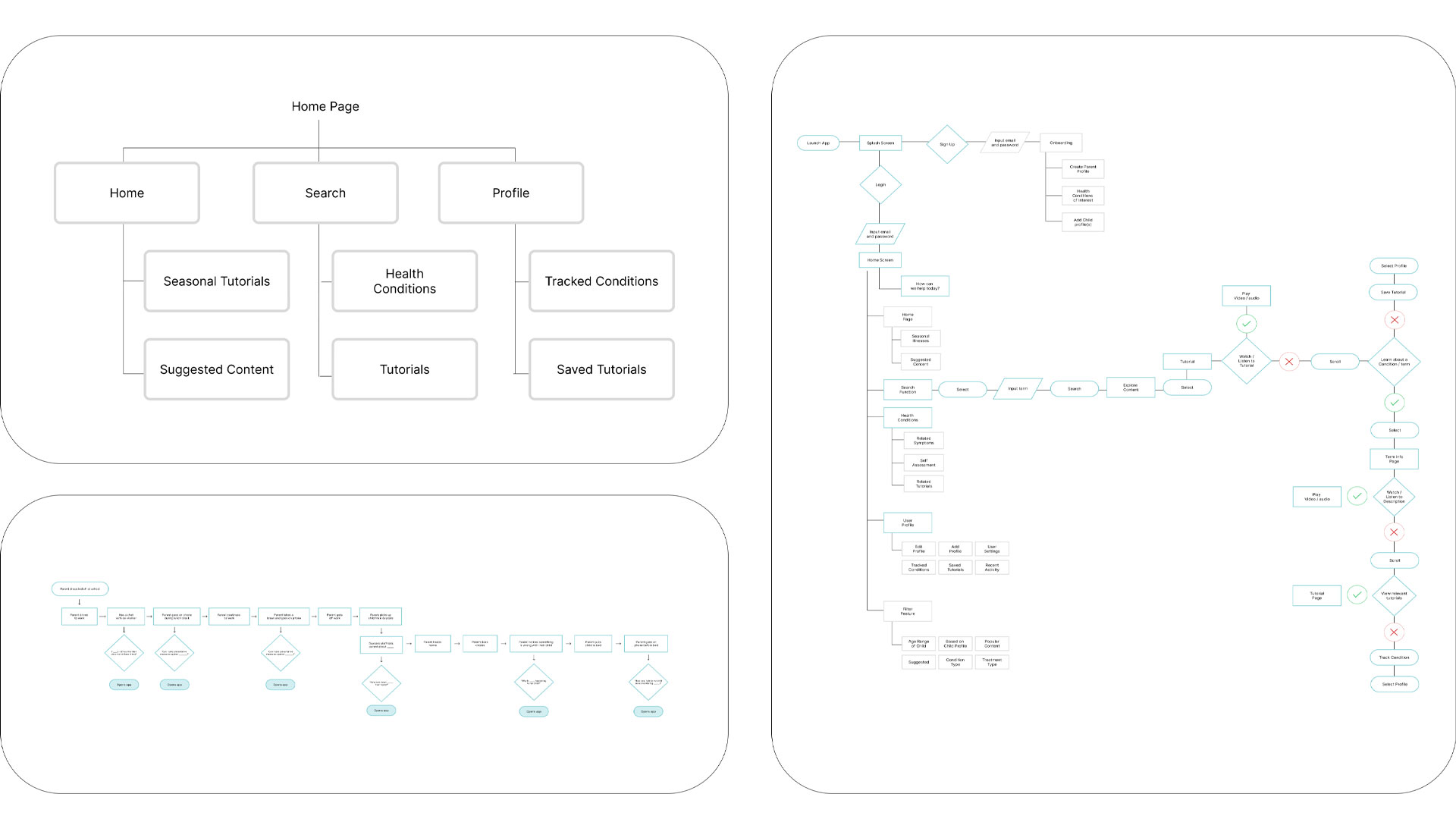
Audience Personas
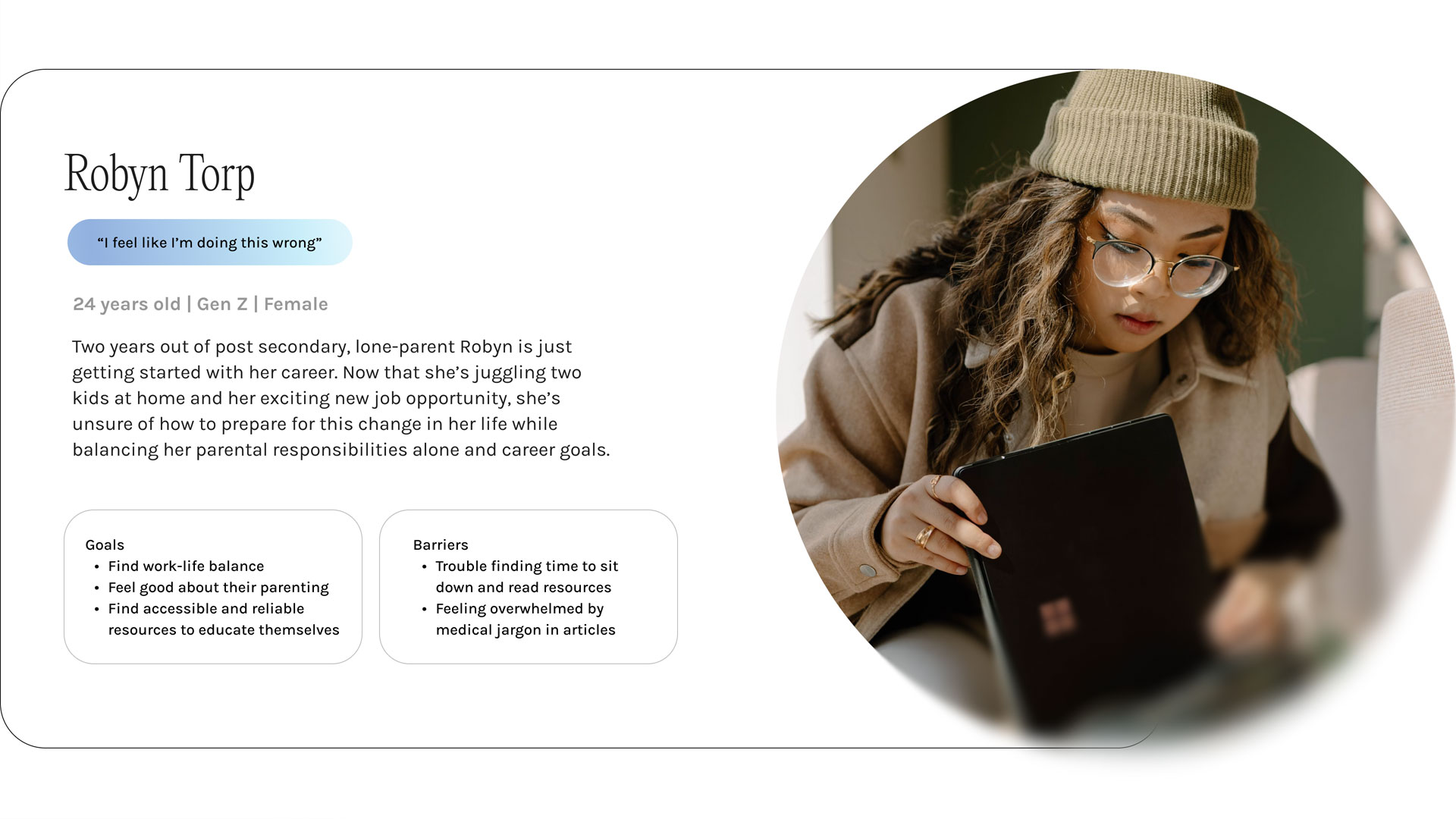
After analyzing the market and identifying the solution we wanted to design, we gathered 15 survey responses and 5 interviews.
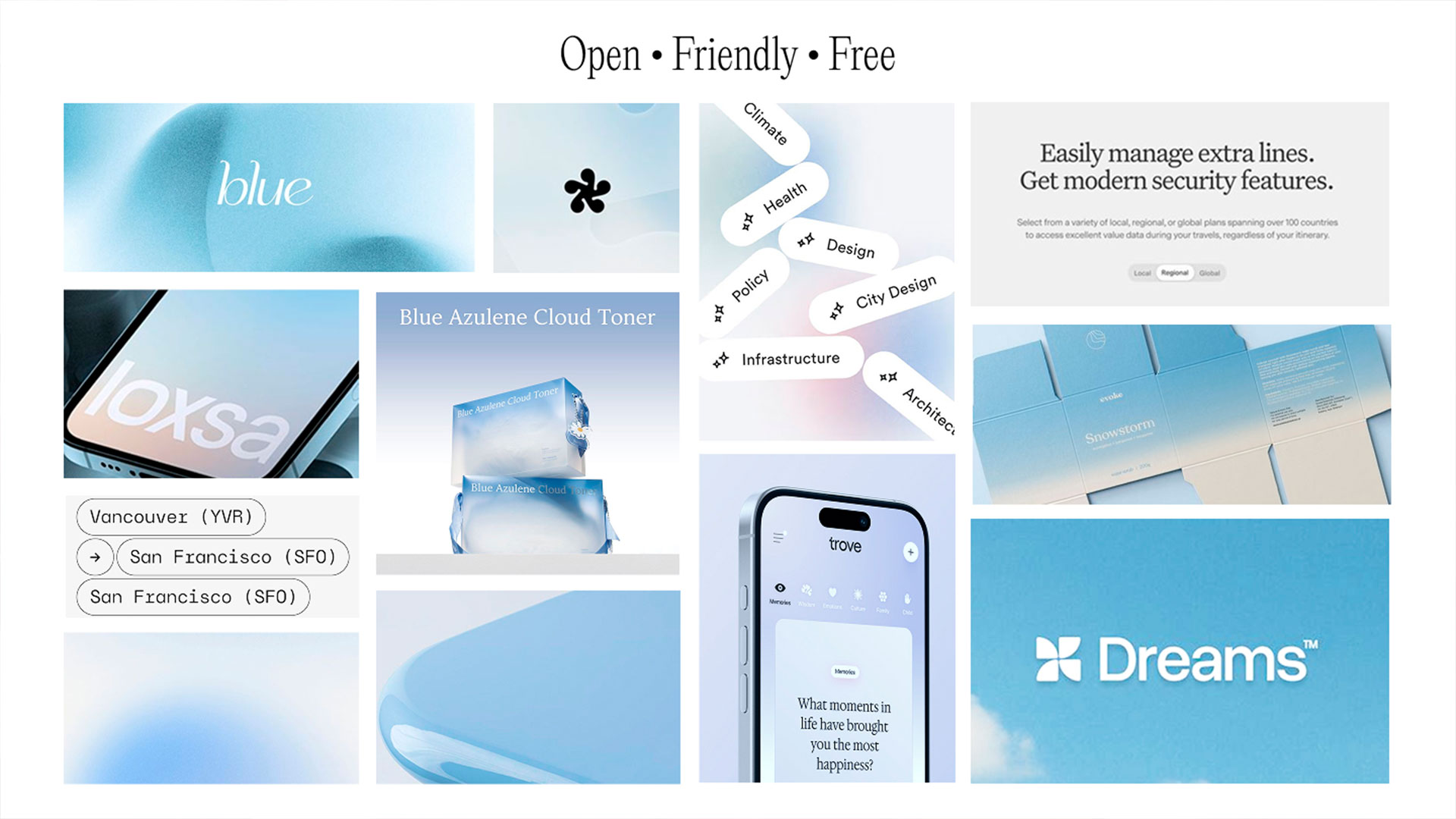
Brand Strategy
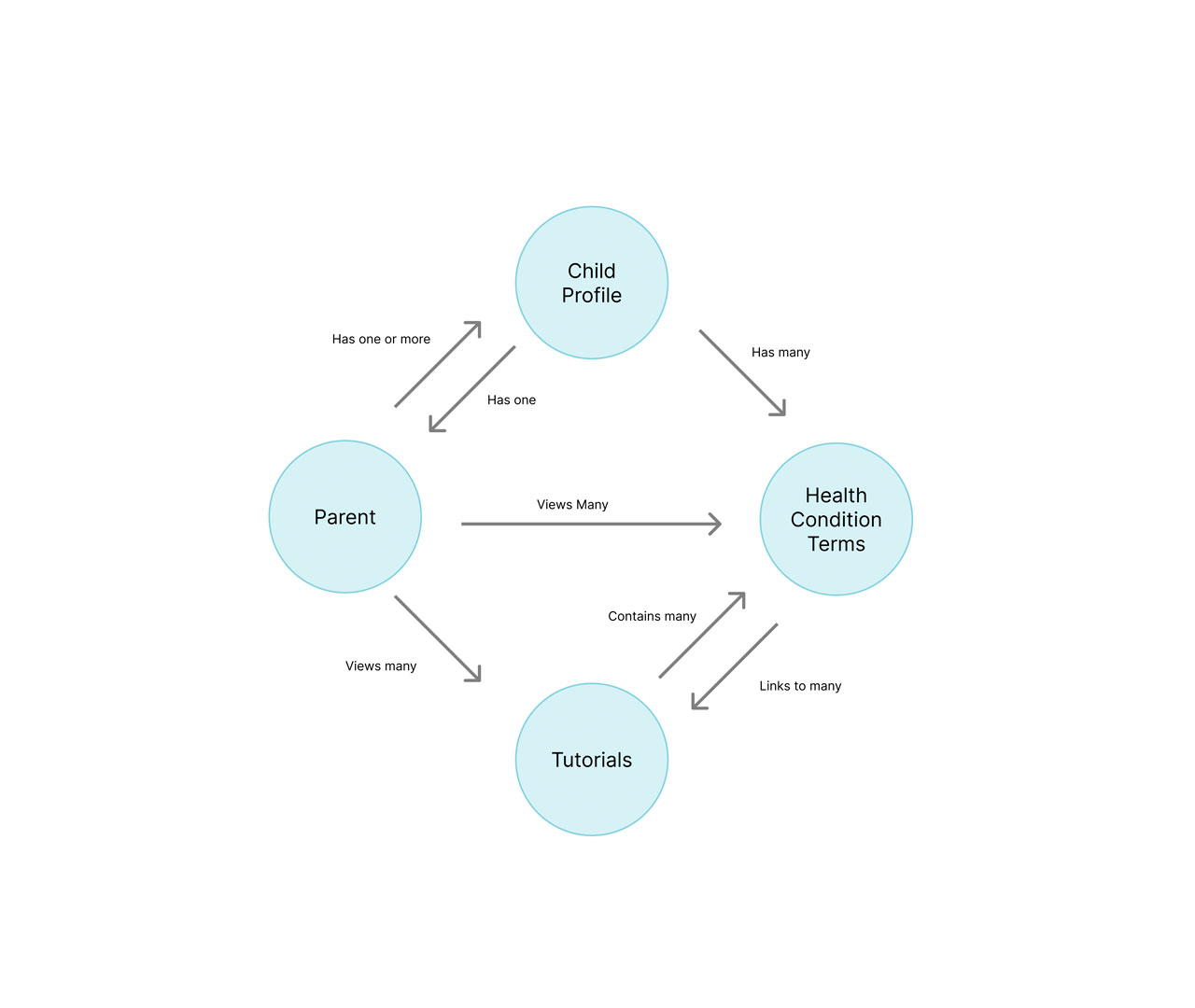
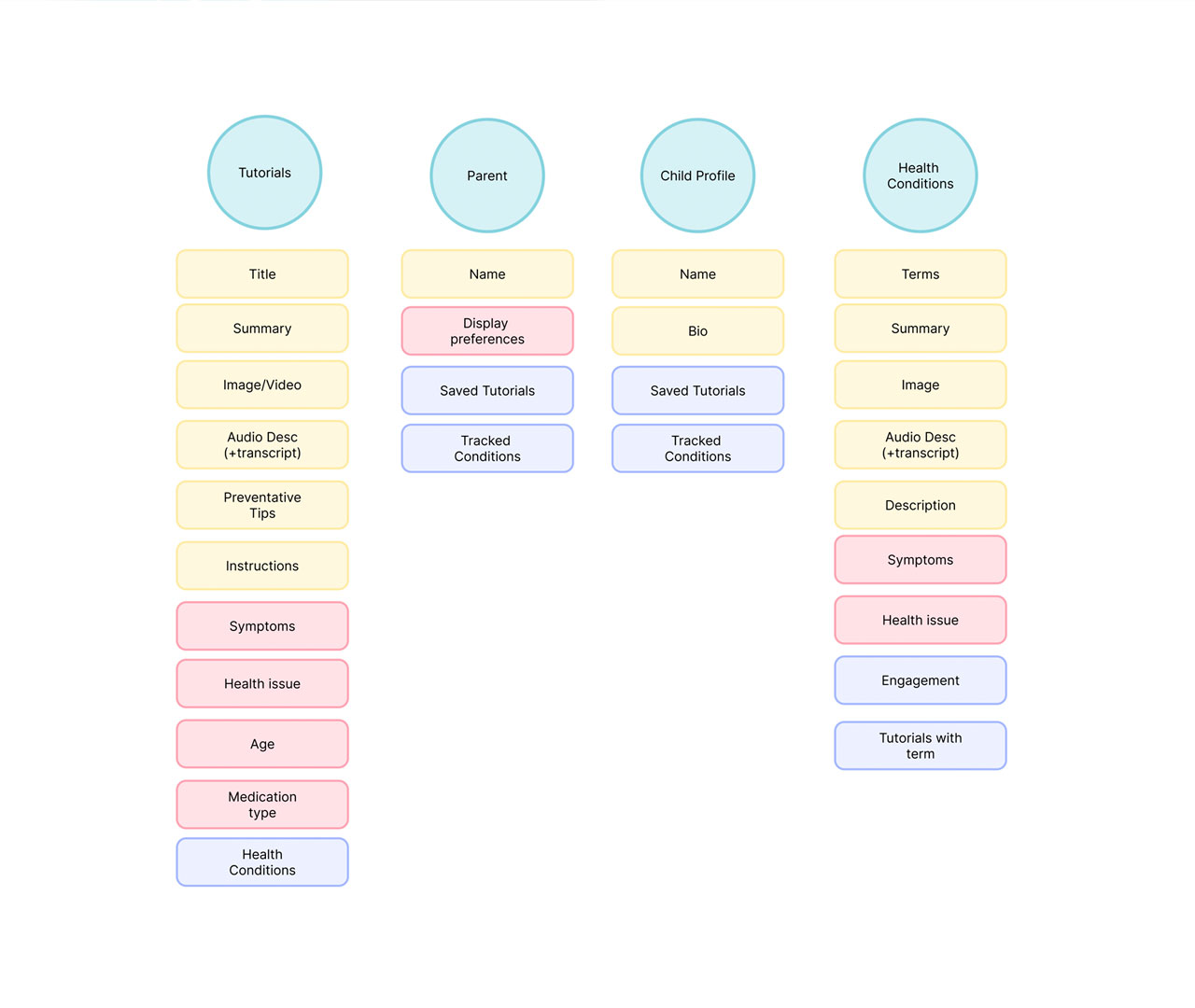
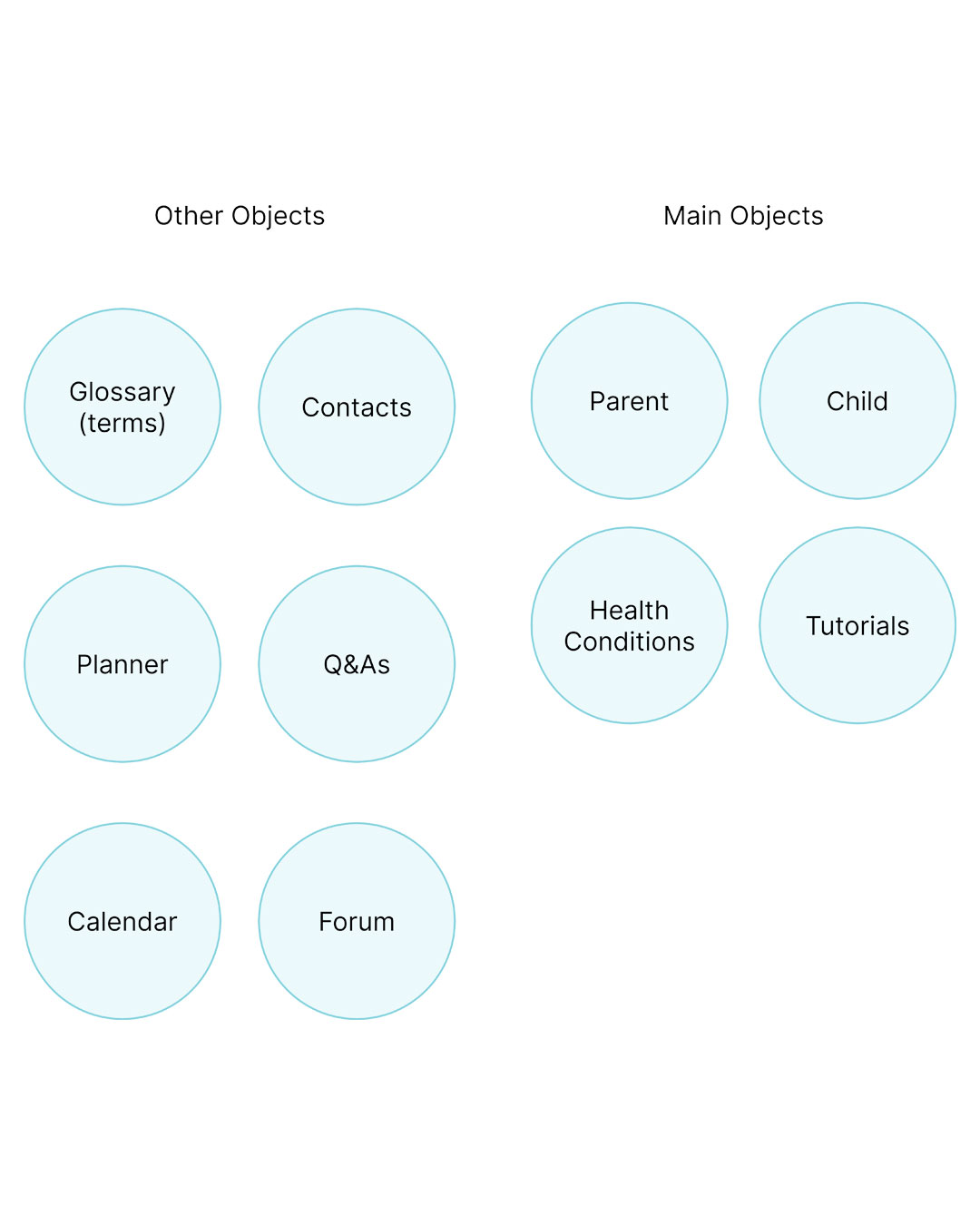
To build a more intuitive and consistent experience, I applied an object-oriented UX methodology throughout the project. I started by identifying the core objects users rely on, then mapped how they interact, change, and connect. This approach gave the design a strong foundation and made it easier to craft interactions that match how people naturally think about the product.
Ideation
To build a more intuitive and consistent experience, I applied an object-oriented UX methodology throughout the project. I started by identifying the core objects users rely on, then mapped how they interact, change, and connect. This approach gave the design a strong foundation and made it easier to craft interactions that match how people naturally think about the product.
Wireframing
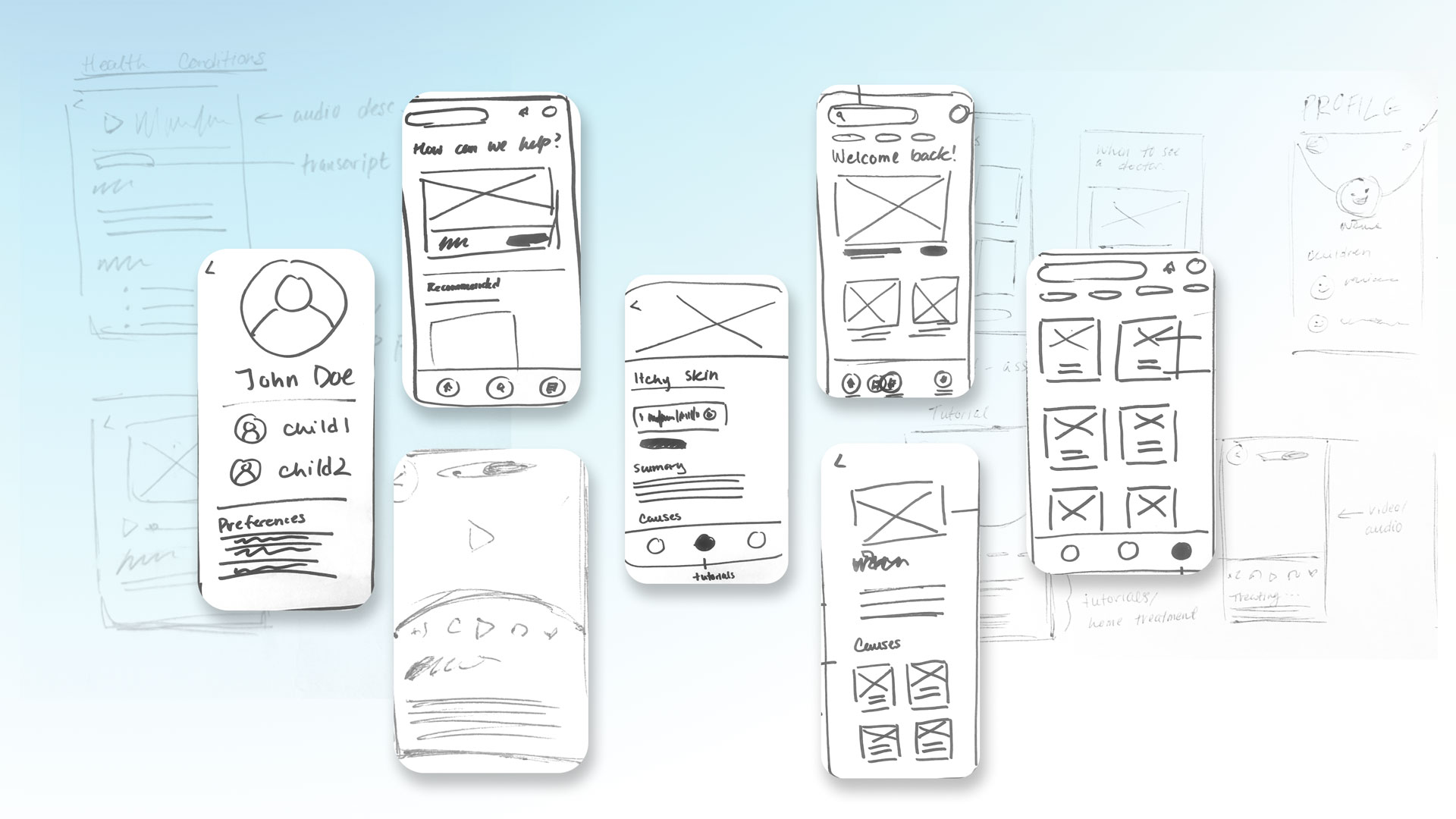
To build a more intuitive and consistent experience, I applied an object-oriented UX methodology throughout the project. I started by identifying the core objects users rely on, then mapped how they interact, change, and connect. This approach gave the design a strong foundation and made it easier to craft interactions that match how people naturally think about the product.
Prototype
To build a more intuitive and consistent experience, I applied an object-oriented UX methodology throughout the project. I started by identifying the core objects users rely on, then mapped how they interact, change, and connect. This approach gave the design a strong foundation and made it easier to craft interactions that match how people naturally think about the product.
Final Takeaway
In order to better understand the target audience, I conducted research using secondary sources.
Final Takeaway
In order to better understand the target audience, I conducted research using secondary sources.